
Organised by the land, not by the folder.
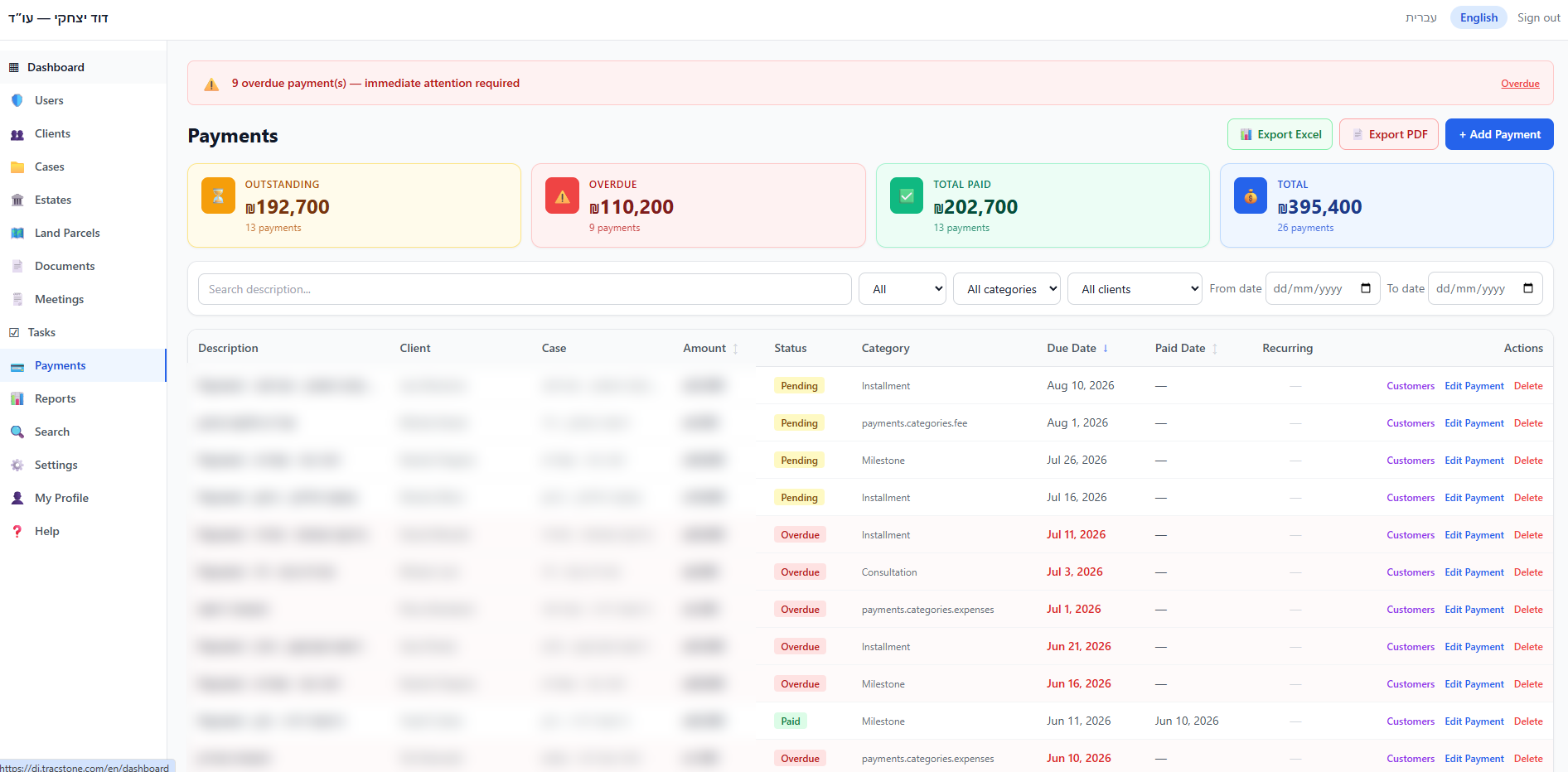
A land management and planning CRM for practices that handle land transactions and planning procedures — landowners and their fractional shares, parcels by block and plan number, planning cases through their statutory workflow, the complete document archive, consultant costs and payments, and a portal where the practice’s own clients can see their file.
One platform instead of a shared drive and a memory.
Land-planning work is document-heavy, slow-moving and fractionally owned. A single parcel can involve a dozen owners with different shares, a decade of committee correspondence, several consultants on separate agreements, and a planning status that changes four times a year. Practices run this on shared folders and the recollection of whoever has been there longest. This system centralises the land, the people, the procedure, the paperwork and the money into one place with an audit trail underneath it.
Everything the practice runs on.
Five things that follow from modelling the land properly.
The parcel is the primary key
A land-planning practice does not organise its work by customer or by project — it organises it by the land. Everything here hangs off block, parcel and sub-parcel with the plan number attached, which is how the practice already thinks and how the registry already works.
Ownership is fractional, and the system knows it
Land is rarely owned by one person. Owners carry ownership percentages and shares, joint-ownership agreements sit against the parcel, and a communication goes to the right subset of owners rather than to a list someone maintains by hand.
The archive is the product
Registry extracts, powers of attorney, committee decisions, zoning documents, architectural plans, invoices and receipts all live in one versioned store with full-text search, audit trail and metadata — so the answer to “where is the document” stops being a person.
Status is a workflow, not a note
A planning case moves through defined states — data collection, initial review, submission, municipality review, committee review, approved or rejected. Delay is therefore measurable rather than anecdotal, and the delayed-projects report is a query.
The client sees their own file
A portal gives the customer’s own clients access to their documents and invoices, which removes the single largest category of inbound phone calls without giving anyone access to anything else.