Observatory — AI + Infrastructure Observability
The Next Generation of Observability Will Follow Decisions, Not Just Requests
AI agents make decisions whose effects ripple through systems for hours or days, so understanding incidents will mean tracing decisions, not only requests.
On a Monday morning, a manager decides to move the team’s weekly deadline from Friday to Wednesday. Nothing visible happens that day. On Tuesday, two people cancel meetings. On Wednesday, a supplier is chased early and delivers a rushed order. On Thursday, a customer receives a product with a missing part. If you investigated only Thursday, you would find a packing error. You would not find the Monday decision that set everything in motion.
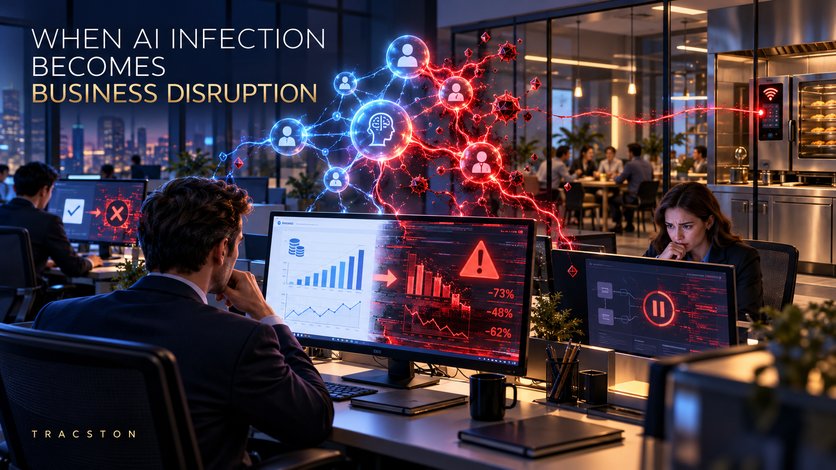
Modern technology systems are beginning to have their own Monday decisions, and many of them are now made by AI.
How tracing works today
Traditional distributed tracing follows requests.
A typical trace tells a short, simple story:
- A user opens an application.
- The request moves through several services.
- Engineers trace that request across the architecture.
This works well for what it was designed for. The story lasts a second or two. It begins with a person clicking something and ends with a response. If the response was slow or failed, the trace shows where.
What agents change
AI agents introduce something different. They do not just respond to requests. They make decisions, and those decisions lead to other decisions.
A single user request may generate an entire decision tree. A decision tree is a branching series of choices, where each choice opens up new ones. It might unfold like this:
- One agent delegates to another.
- The second queries several systems.
- A third agent evaluates the result.
- The workflow pauses for approval.
- Another model continues the process.
- An automated action changes a production system.
Each step is taken by a different piece of software, sometimes using a different AI model, with its own reasons. The last step, changing a production system, means changing the live technology that customers and staff depend on.
The process may continue for minutes, hours or even days. It may wait overnight for a person to approve a step. It may be picked up by another agent the next morning. By the time its effects are felt, the original request is long finished and its trace has closed.
A traditional request trace is no longer enough.
Observability must follow the decision lifecycle.
The decision lifecycle is the whole life of a decision: what prompted it, how it was made, what it led to and what happened as a result. Following it means keeping these pieces connected, even when they are spread across days and many systems.
The questions a decision trace must answer
To make that link possible, an organization needs to be able to answer a set of questions about each significant AI decision:
- What triggered the decision?
- Which agent participated?
- Which information influenced it?
- Which model produced the reasoning?
- Which systems were consulted?
- What actions occurred?
- What changed afterward?
- Did the decision improve or damage the target service?
The last question is the one most often left unanswered. A decision is recorded as “done” when the action completes. Whether it was a good decision only becomes clear later, and by then nobody is looking.
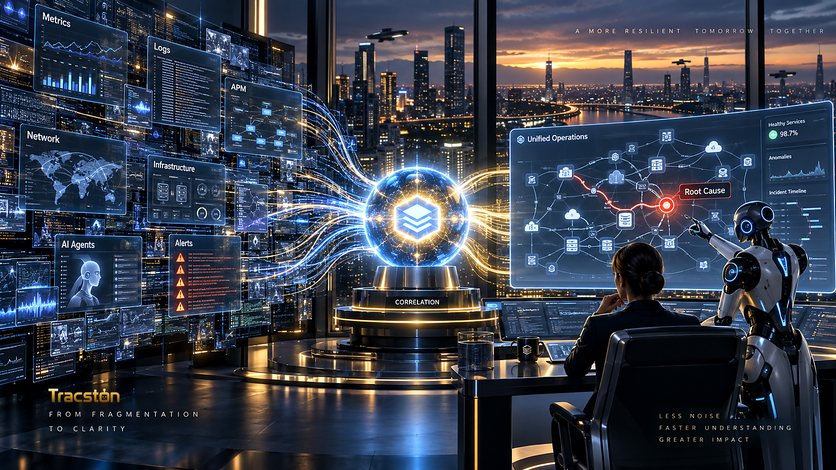
This connects AI monitoring with infrastructure, logs, APM and change management.
Two directions of investigation
Once decisions are traced, investigation can run in both directions.
Eventually, an operations team should be able to select an incident and see not only which infrastructure component failed, but which AI decisions preceded the failure. That is the backward view: from effect to cause.
Or select an AI decision and understand exactly what changed across the environment afterward. That is the forward view: from cause to effect. It lets teams check whether an agent’s decisions are actually helping, before a problem forces them to look.
Both directions matter. The first shortens incidents. The second prevents them, by showing which kinds of automated decisions tend to cause trouble.
None of this is meant to slow automation down. The point is the opposite. Teams are only willing to let agents make more decisions when they can see what those decisions led to. If every automated change is a mystery until something breaks, the natural response is to switch the automation off. If every change can be followed forward and backward, it becomes possible to trust it, correct it and gradually give it more room.
What this means for your organization
Treat AI actions as changes. Any action an agent takes on a live system should be recorded in the same change record as actions taken by people.
Record the why, not just the what. For each significant automated decision, keep a short note of what triggered it and what information it used.
Link decisions to what follows. Make sure the reference number of a decision can be found in the logs and alerts that come after it.
Check recent decisions first. Add “which automated decisions were made recently?” to the standard checklist for investigating incidents.
Review outcomes. Once a month, pick a few AI decisions and check what actually happened afterwards. Were they good decisions?
That is where observability begins moving from monitoring systems to understanding cause, decision and consequence.
Tracston works on these questions in Observatory.