AFPM — AI Flow & Performance Monitoring
When a MissionFlow Fails, Where Do You Start Looking?
When AI work goes wrong, every system involved may say it did its job, so finding the cause means seeing the whole story on one timeline.
A parcel you ordered never arrives. You call the shop, and they say it was dispatched on time. The warehouse says it was scanned and loaded. The courier says the van was working and the driver completed the route. Every company’s records are correct. And still nobody can tell you where your parcel is, because nobody is looking at the whole journey at once.
AI failures often look exactly like this.
Everything was working, and it still failed
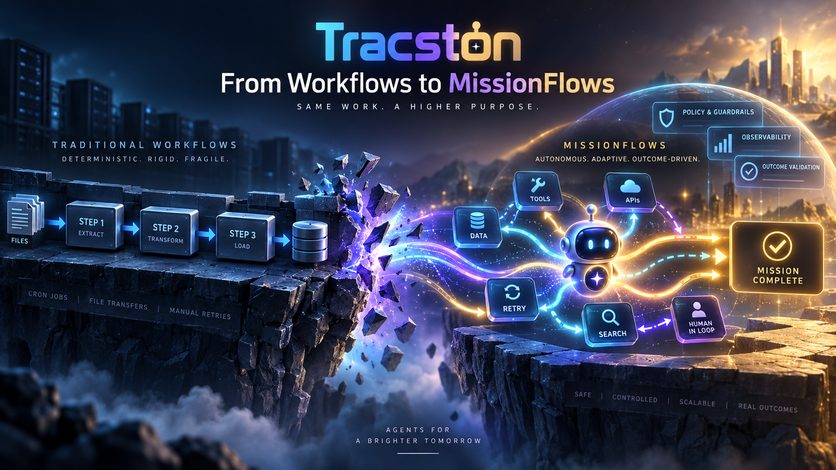
A failed MissionFlow (previously referred to as an AI workflow) rarely has a single obvious cause. The infrastructure may be healthy. The model API may be available. The application may report no exception. Yet the task still fails.
So where do you look? The honest answer is that the cause can sit in many different places, and each place is usually recorded by a different system.
Perhaps the original prompt was ambiguous. The instruction given to the AI could be read in two ways, and the AI chose the wrong one. Nothing crashed. It simply answered a slightly different question.
Perhaps context was missing. Context is the background information the AI needs to do the job, such as the customer’s history or the latest version of a policy. If a document search returned an old version, the AI worked carefully from the wrong facts.
Perhaps an agent selected the wrong tool. An agent that can look things up in several places may choose the wrong one, for example checking the sales system when it should have checked the billing system.
Perhaps a downstream API returned unexpected data. “Downstream” means a system further along the chain that the AI depends on. If it sends back an empty answer or a strange format, the AI may carry on regardless.
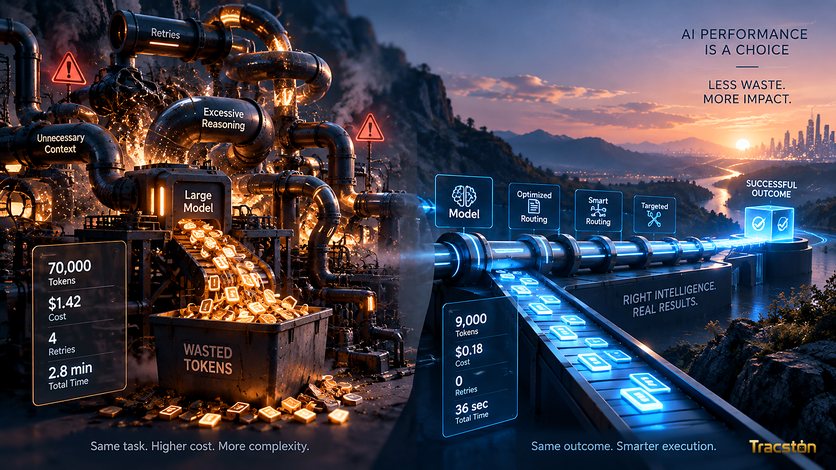
Perhaps the model repeatedly retried the same reasoning path. The AI tried an approach, it did not work, and it tried the same approach again, and again, until it ran out of time or budget.
Perhaps a human approval remained pending. Many MissionFlows pause for a person to approve a step. If that person is on holiday, the work waits silently.
Or perhaps the entire MissionFlow technically completed while producing the wrong result. This is the hardest case of all, because no alarm ever sounds.
Each tool holds one piece of the story
Traditional logging systems capture pieces of this story. The trouble is that each piece lives in a different place, owned by a different team, often in a different format.
- Application logs
- A diary written by the software itself: “received request”, “saved record”, “sent email”. They show application events.
- Infrastructure monitoring
- Watches the machines underneath: servers, storage, networks. It shows resource health.
- APM
- Application performance monitoring. It follows a request as it moves through different parts of an application and shows where time was spent. These records are called traces.
- AI gateways
- A checkpoint that sits between an organization’s software and the AI models it uses. It may record prompts and responses.
- Agent frameworks
- The software used to build and run agents. They record tool activity: which tools were used and what came back.
Every one of these is useful. None of them, on its own, can explain why a customer received the wrong answer. That explanation sits in the gaps between them.
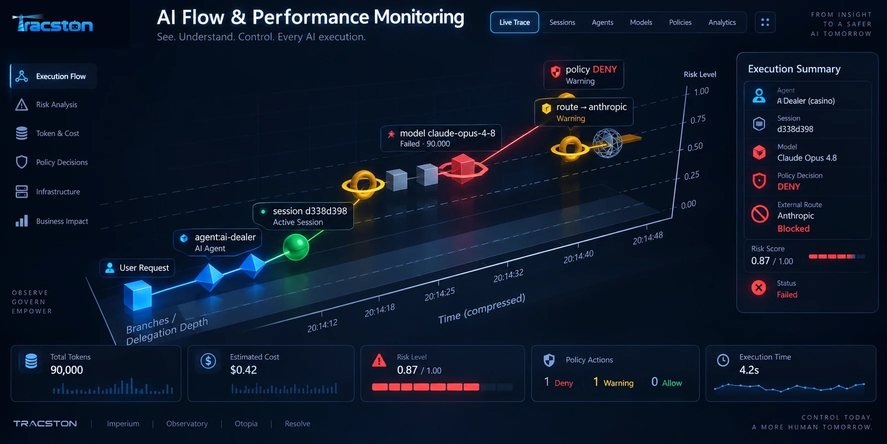
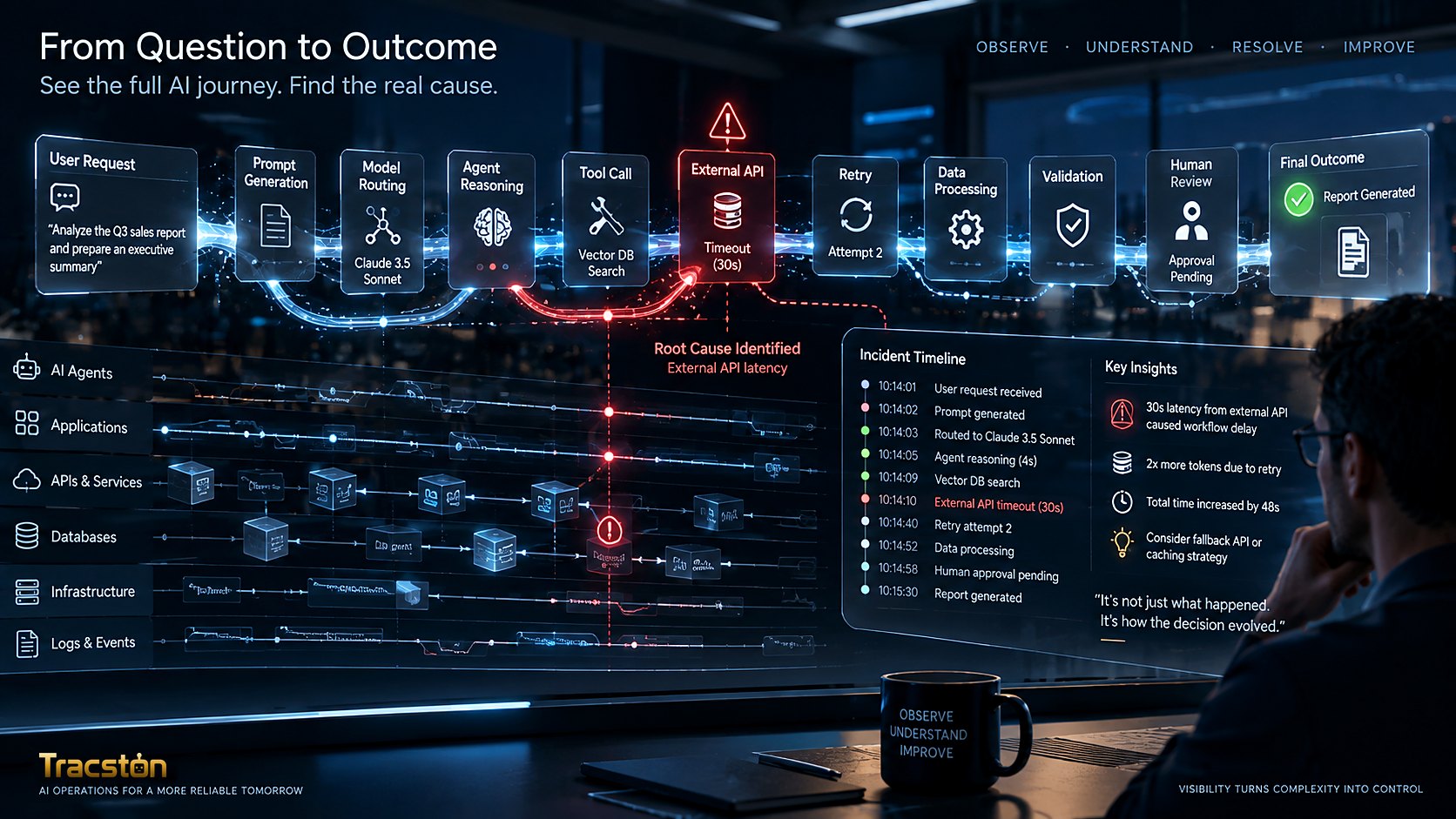
But troubleshooting requires seeing all of these events as one timeline.
Reading the failure as one timeline
A useful AI incident view should allow an engineer to move through time and see each step in order, with every system’s record placed on the same line:
- User request
- prompt generation
- model decision
- agent reasoning
- tool call
- external service
- infrastructure behavior
- response
- validation
- final outcome.
Validation, near the end of that chain, is the check that is supposed to catch a bad result before it goes out. It is worth watching closely, because a validation step that checks the wrong thing will pass a wrong answer with confidence.
This turns AI troubleshooting from forensic reconstruction into operational analysis. Forensic reconstruction is detective work after the fact: collecting evidence from many places and piecing it together. Operational analysis is what happens when the evidence is already assembled and you can spend your time on the actual question.
Why this matters more over time
The ability to move backward through a failed MissionFlow may eventually become as fundamental as distributed tracing became for microservices.
MissionFlows are now reaching the same point. They involve more steps, more systems and more decisions made without a person watching. And because AI output is written in convincing language, a wrong result can look just as confident as a right one. The failure is harder to spot and the path to it is longer.
What this means for your organization
Take one recent failure and rebuild it. Pick an AI mistake from the last month. Try to write down its full timeline from start to finish. Note how many systems you had to open and how long it took. That effort is the cost of not having one timeline.
Give each piece of work an identity. Ask your engineers whether one reference number can follow a request through every system it touches, including the AI steps. If it cannot, that is the first gap to close.
Check what your final check checks. Look at the validation step in your most important AI process. Does it test whether the answer is correct, or only whether it is well formatted?
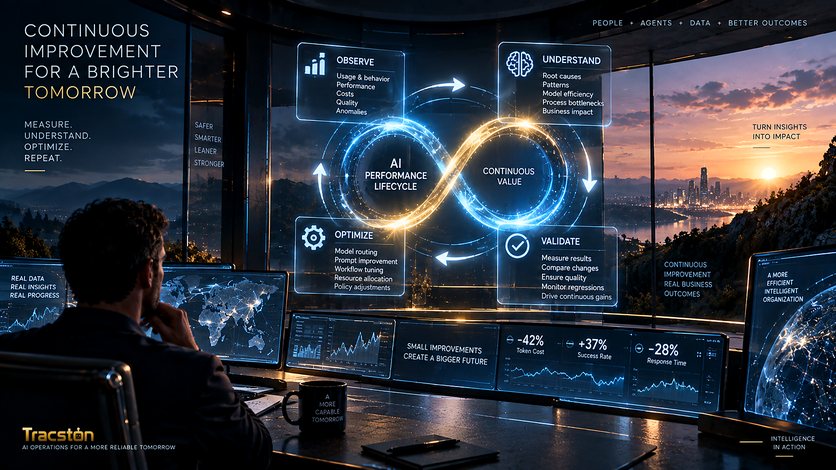
Watch for silent waits and repeats. Ask for a simple report of AI work that retried many times or waited a long time for a person. These are often early signs of the failures above.
Agree who owns the whole flow. Each system has an owner. Make sure someone also owns the journey across them.
We need to understand how the decision evolved.
Tracston works on these questions in Observatory.
Updated October 2026: terminology aligned with MissionFlow. Previously referred to as AI workflows.