AI Flow & Performance Monitoring (AFPM)
The Nine-Token Answer That Wasted Three Seconds.
A tiny answer can carry a large input, a network round trip and a delay on the critical path. The output is not the workload.

A tiny AI answer feels cheap. Nine tokens. One yes-or-no decision. Surely that's negligible.
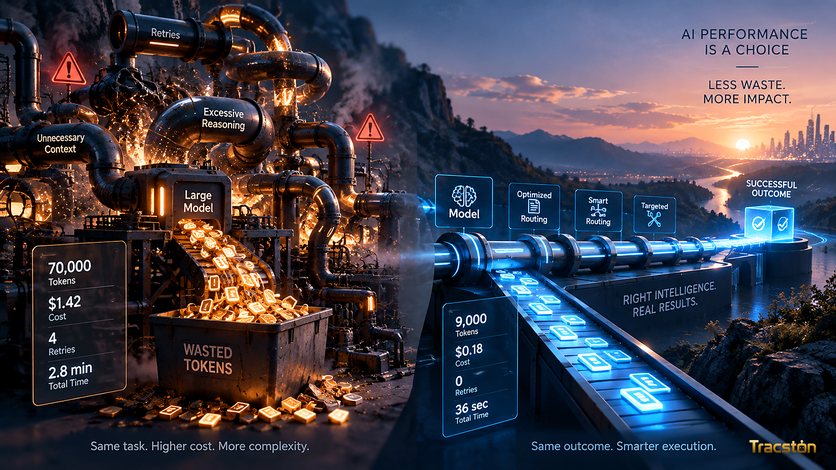
Now imagine a coding assistant performing a similar check before thousands of tool actions. Each check may carry large context, take a few seconds including the network round trip, and postpone the next action. The output is tiny. The operational footprint may not be. (The figures in this essay are illustrative; none is a measurement from a customer system.)
Counting the wrong thing
Teams often celebrate low output-token counts because they are easy to see. But a model request also has input, caching behavior, processing time and downstream impact.
Consider an illustrative investigation in which short checks turn out to be an important source of both repeated context transmission and execution delay. Such a finding would not mean every safety check is unnecessary. It would mean the right architecture must balance safety, latency and the scope of information sent to the model.
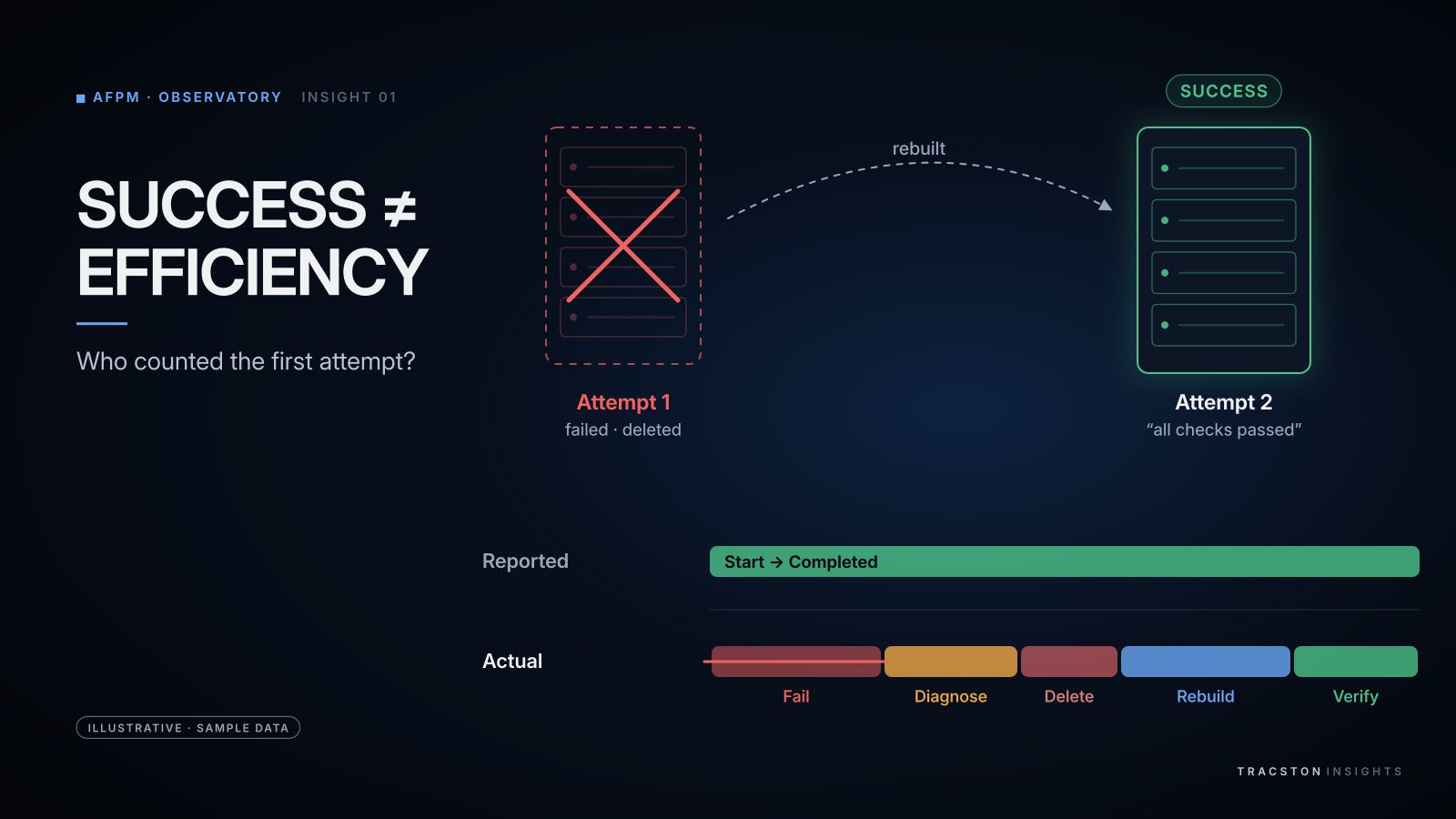
A costly request can be justified. A cheap request can be harmful if it is placed on a high-frequency path. Without request-level evidence, both look innocuous.
Imagine the scale
A three-second delay sounds harmless. Multiply it across a large number of sequential operations and it can materially change the time to deliver a mission. Parallel work changes the arithmetic, so companies should measure critical-path latency rather than simply multiplying averages.
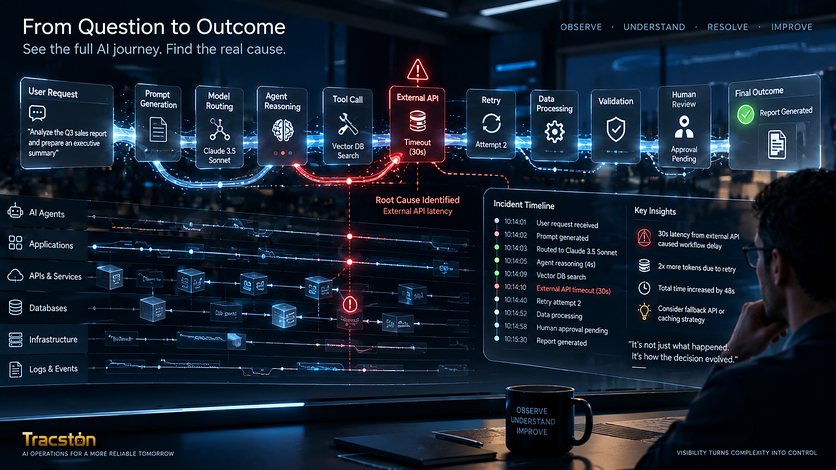
The AFPM Labs show both effects in fictional missions. In Lab 01, Where Did the AI Budget Go?, the Pricing agent fetches documents the Research agent has already summarized and sends all 41,800 tokens to the model a second time; for those 3.4 seconds the quotation does not move. In Lab 02, The Slow Mission, one tool on the critical path holds validation, the draft and the approval behind it. The missions, payloads and metrics are simulated.
The same applies to money. Cached input may cost less than uncached input. Subscription usage does not map neatly onto public API prices. Estimates must distinguish observed usage from hypothetical pricing.
A better control room
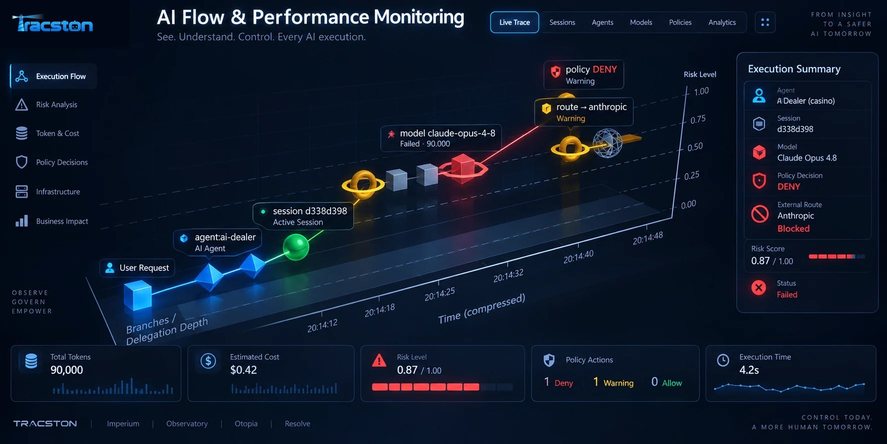
AFPM should let an operator trace a mission from its outcome back through the checks that consumed time and resources. For each AI request routed through it, Imperium already records the agent, the model requested, and the token usage and cost. The questions to answer from that record: Which model made each decision? How much context did it receive? What was reused? Did the check ever change the action? Could a deterministic rule safely handle part of the workload?
The goal isn't to abolish checks. It's to ensure each one earns its place.
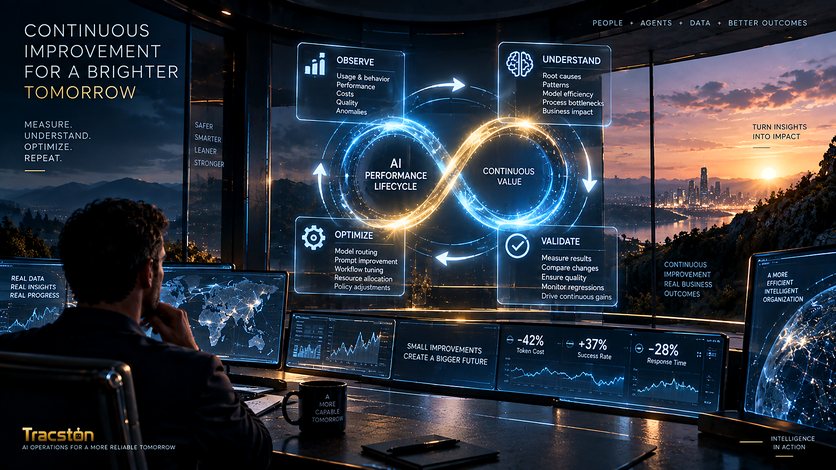
The next AI efficiency breakthrough may not be a smarter model. It may be the courage to measure all the little decisions nobody thought mattered.
Tracston works on these questions in Observatory and Imperium.